DESIGNING WITH TEXTURE: HOW LAYERED MATERIALS CREATE DEPTH WITHOUT NOISE
January 20 2026
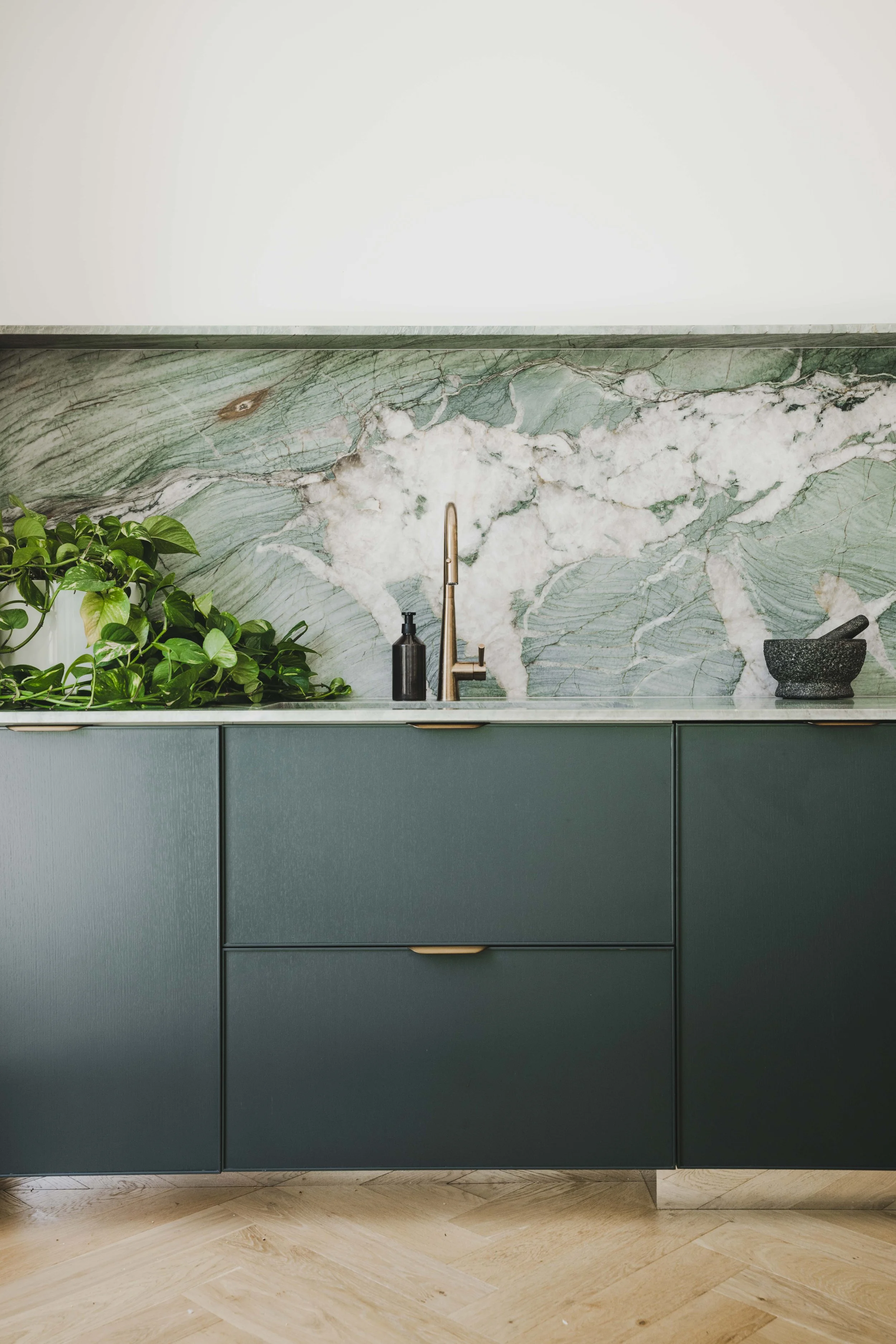
Some of the most memorable interiors are not built around a single statement. They are built around feeling.
The way light moves across a surface. The contrast between something smooth and something tactile. The quiet balance that happens when materials are chosen to work together rather than compete. This is where texture comes in.
Instead of relying on colour changes to define a space, more homes are being shaped by layers of material. Similar tones. Different finishes. Subtle shifts that reward a closer look. It feels calm. It feels intentional. And most importantly, it feels good to live in.
Texture is what gives a space its depth
When colour is restrained, texture does the talking.
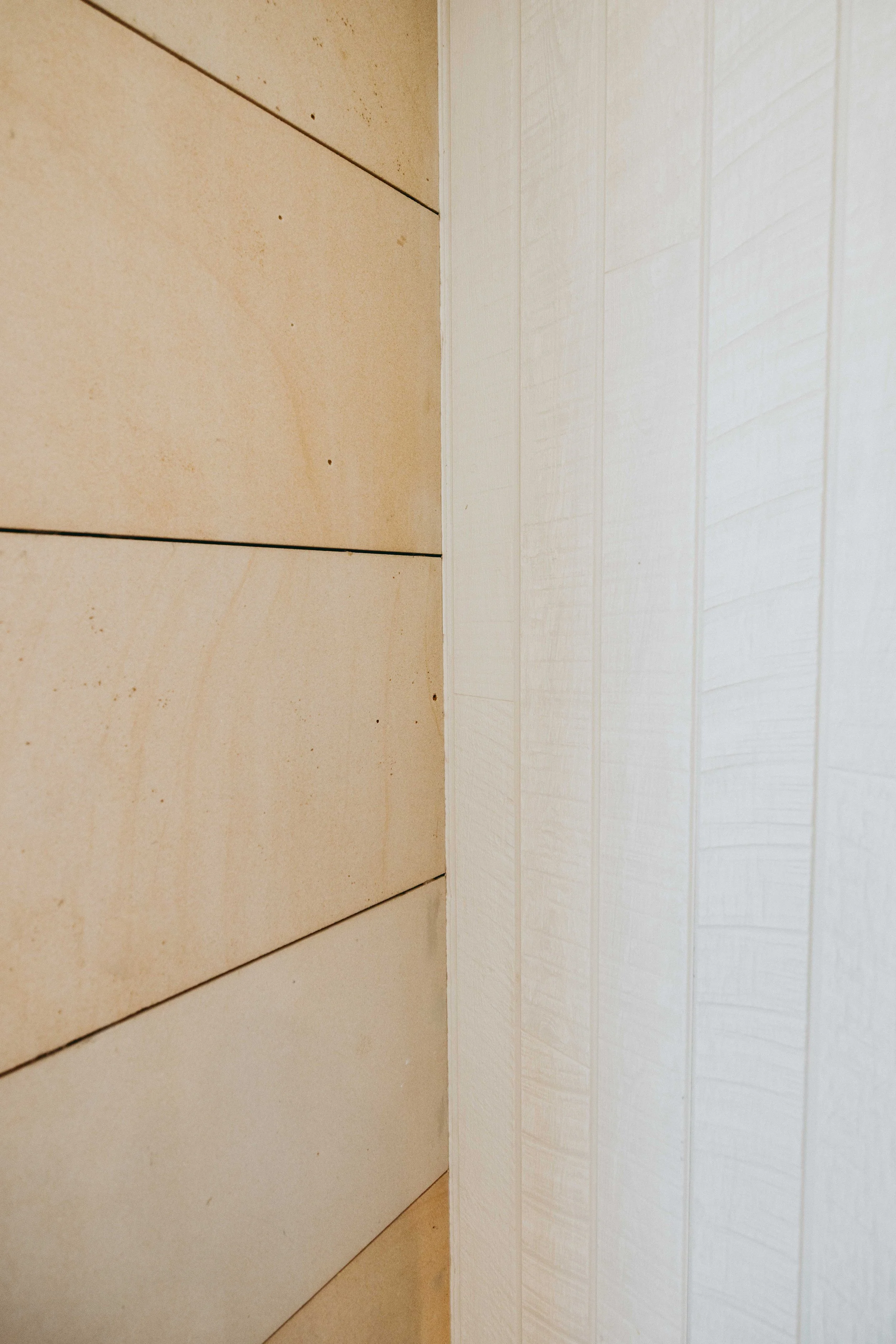
Think honed stone next to timber with visible grain. Soft plastered walls paired with brushed metal hardware. Joinery that feels matte and grounded rather than glossy and reflective.
Each surface reacts to light differently. Some absorb it. Some soften it. Some gently reflect it back into the room.
That variation is what keeps a space interesting without feeling busy.
The goal is not to layer for the sake of it, but to build a quiet rhythm through contrast in feel rather than contrast in colour.
Understanding the types of texture that work well together
Texture shows up in more ways than we expect. It can be something you see in the grain of timber, something you feel under hand, or something you notice only as light moves through a room. The strongest interiors tend to layer all three.
Natural textures like timber, stone and linen form the emotional base of a space. They bring warmth, movement and a sense of ease, and they tend to age beautifully over time rather than feeling worn.
Refined textures such as matte cabinetry, satin metals and smoother stone or concrete surfaces provide structure. They ground the space and stop it from feeling too soft or informal.
Soft textures, including plaster, curved forms and upholstery, absorb light and sound. They add comfort and help rooms feel lived in rather than styled.
When these elements are balanced thoughtfully, the space feels complete without relying on a single focal point. Instead, the home reads as calm, cohesive and naturally resolved.
One colour, many expressions
Using one colour family across multiple textures is where this approach really comes to life.
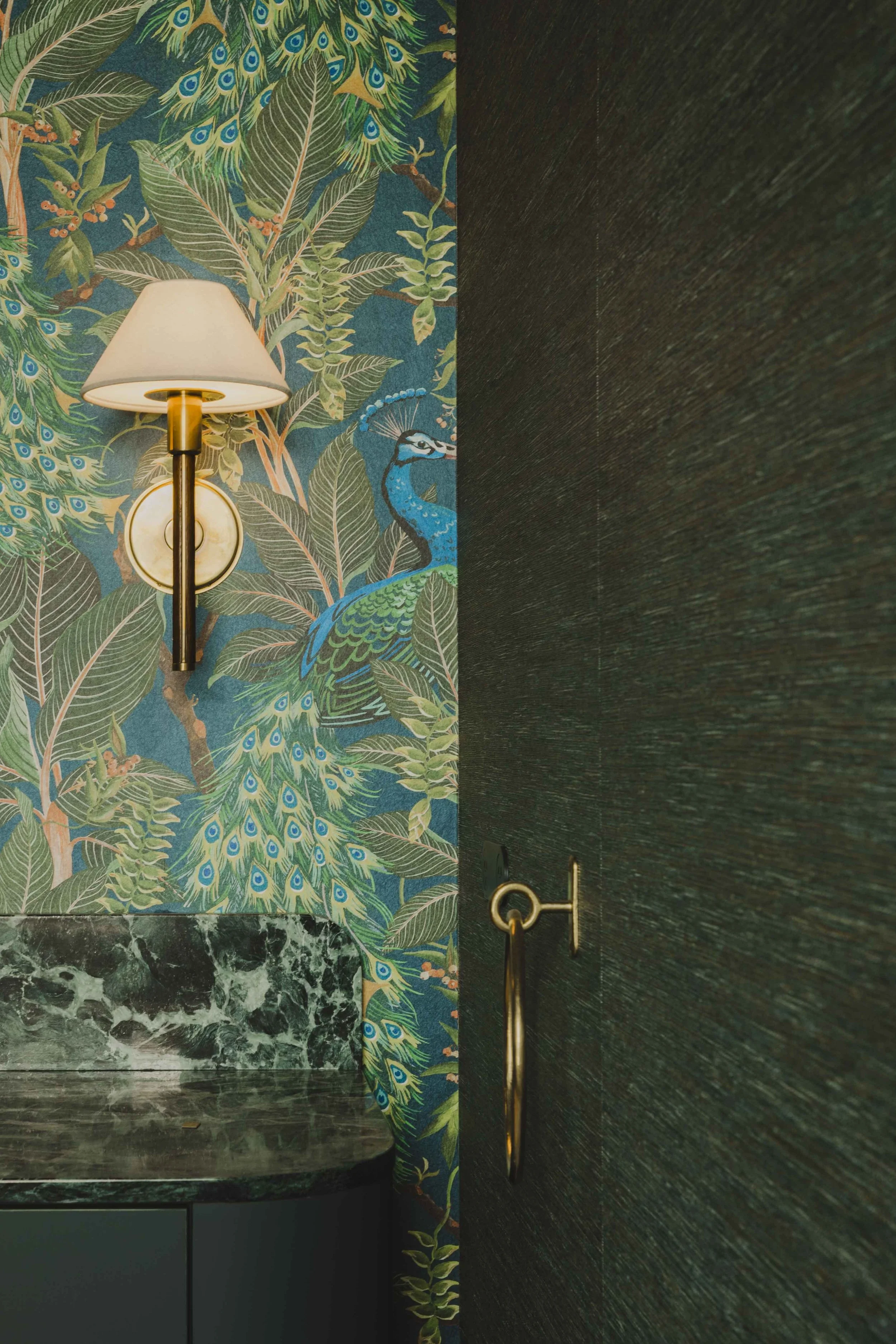
A deep green can appear as cabinetry, stone, tiled splashback and painted walls, each slightly different in finish. The colour stays consistent, but the room never feels flat.
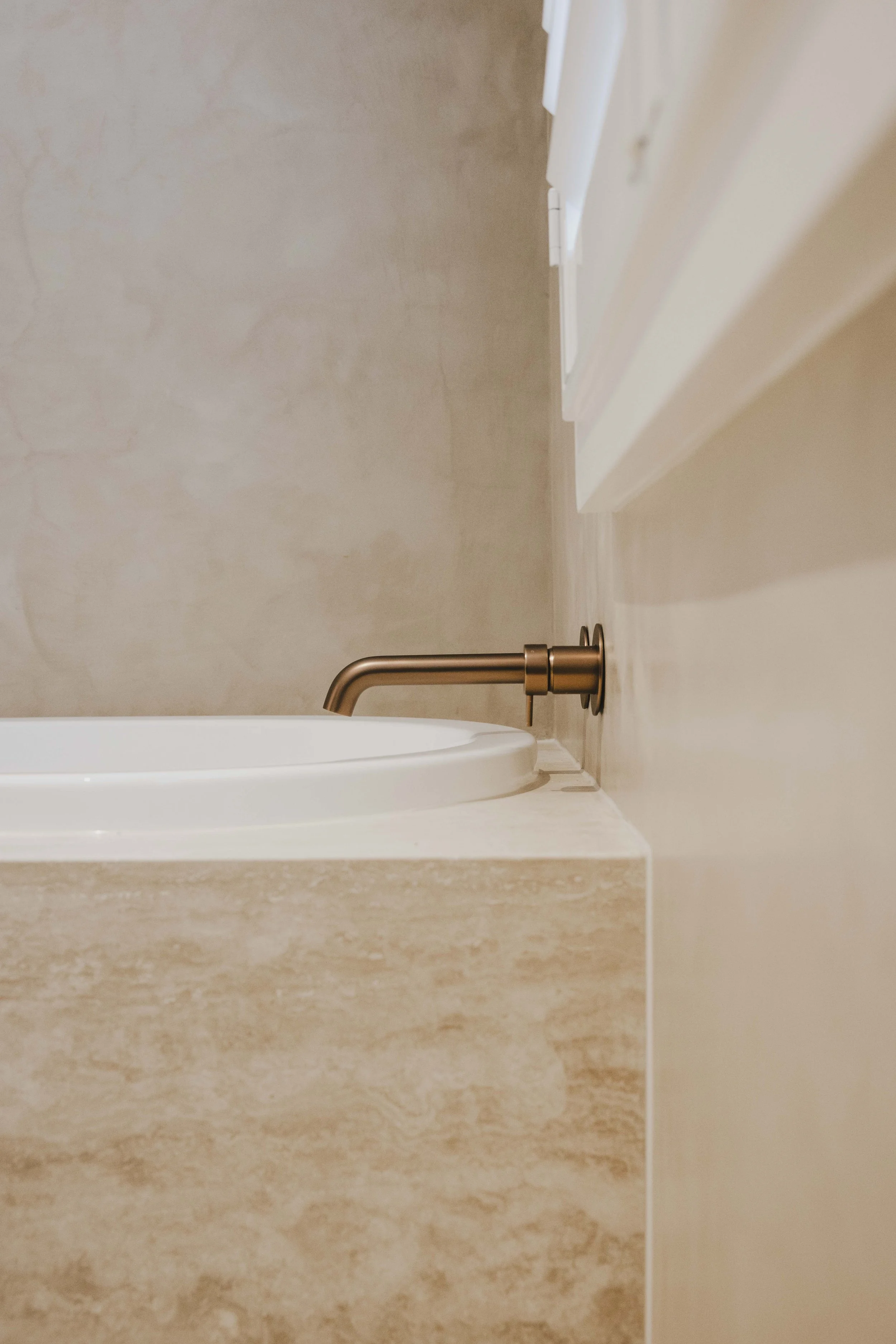
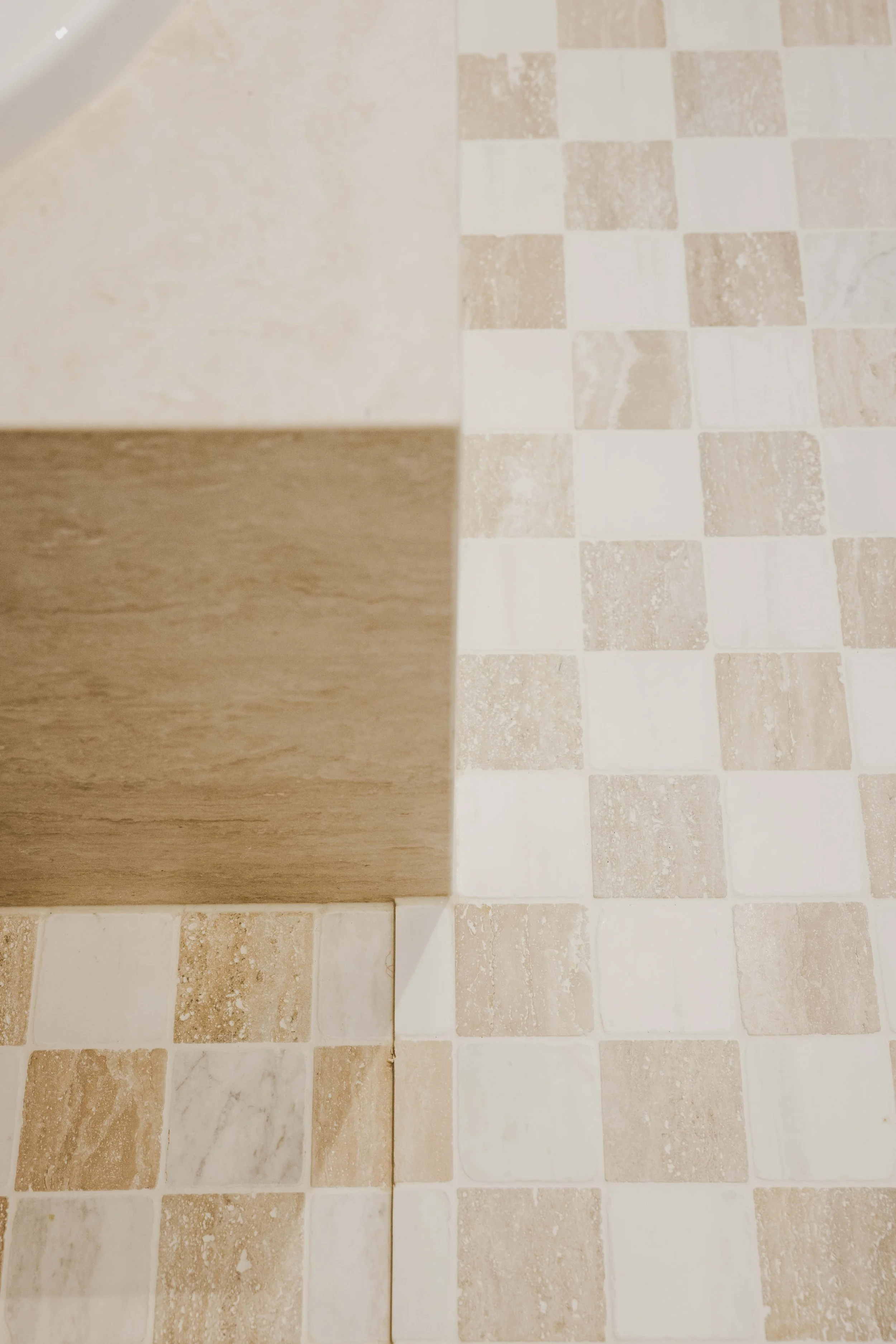
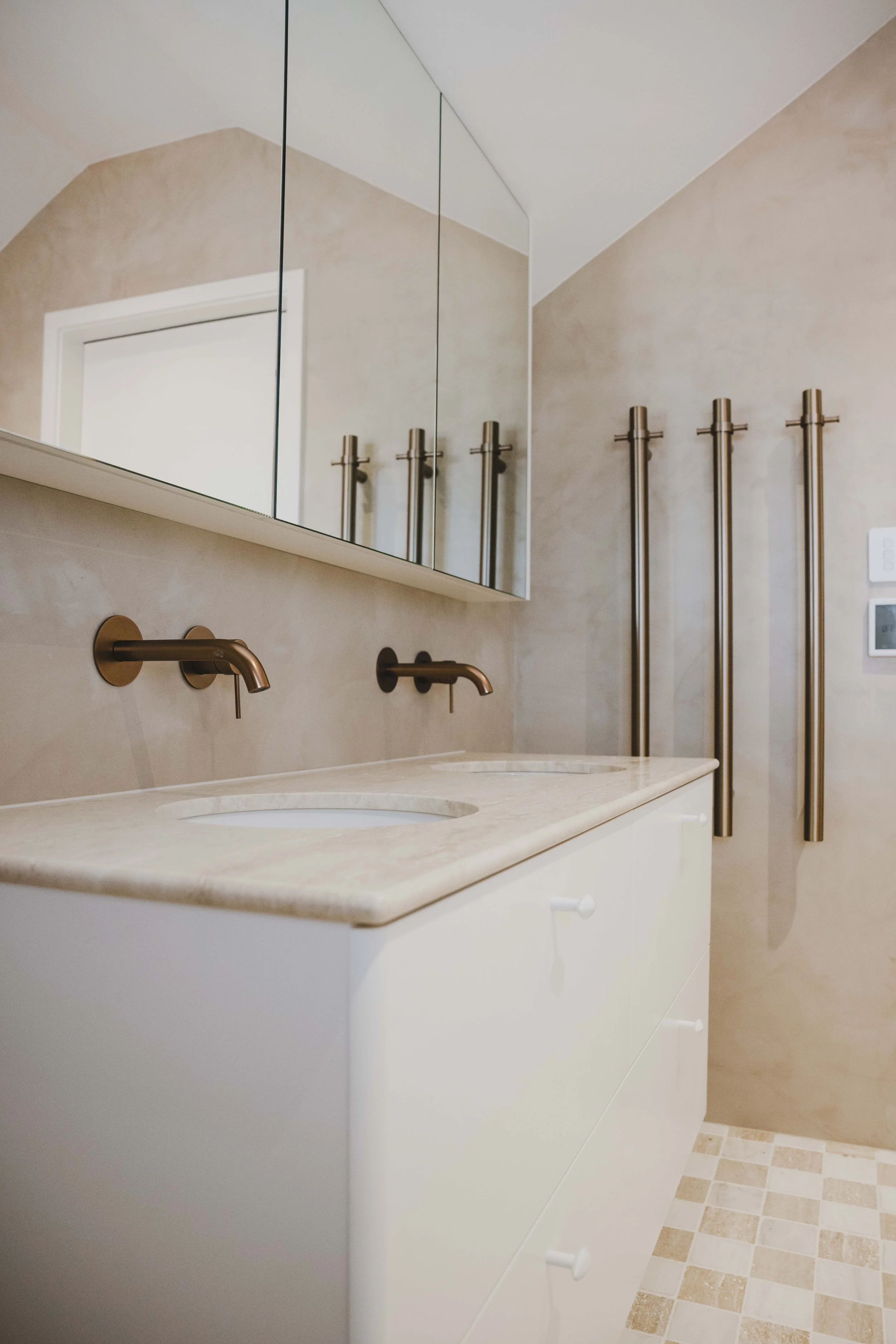
We see this clearly in our Nedlands Bathroom project.
The bathroom uses a travertine palette, but the interest comes from how that colour is expressed across joinery, flooring and surrounding materials.
The result feels cohesive and calm, while still having depth and personality.
Why this approach works so well in real homes
A honed stone benchtop, brushed metal hardware or textured cabinetry all age with quiet confidence. The home continues to feel intentional, even as it is lived in fully.
There is also a sense of calm that comes from cohesion. When colour is restrained and texture does the work, the eye is not constantly pulled in different directions. Rooms feel grounded, comfortable and resolved from the moment you move in.
Marks, patina and everyday wear blend into the story of the space instead of standing out. Rooms feel comfortable from day one and continue to feel relevant as tastes evolve.
This approach allows furniture, art and personal objects to sit naturally within the home. The architecture provides a quiet backdrop rather than competing for attention.
For many clients, this translates to spaces that feel easier to maintain and easier to enjoy.
Texture needs planning, not guesswork
When design relies on texture, the details matter more.
Finish samples need to be seen together. Materials need to be tested in the right light. Transitions between surfaces need to be resolved early, not left to chance.
This is where collaboration between designer, builder and trades becomes essential. Texture driven interiors rely on precision and consistency from start to finish.
Restraint only works when every decision is deliberate.
Bringing it back to how you want to live
If you are drawn to homes that feel calm, grounded and quietly luxurious, designing with texture may be the right direction for you.
At Mayfair, we guide our clients through these material conversations early, helping translate inspiration into spaces that feel cohesive and lived in for years to come.
If you are planning a new build or renovation and want to explore how texture can shape your home, we would love to talk.
Get in touch with Mayfair and let’s start the conversation.